Run importscope on anndata
Repo: scverse/anndata
This example is about package modularization and one cycle-relevant package
back-edge. The config used for the run is
anndata/.importscope.yml.
Equivalent setup:
importscope init
importscope config package set anndata
importscope config exclude add 'docs/**' 'tests/**' 'benchmarks/**' 'ci/**' 'src/anndata/tests/**'
importscope config policy enable
importscope config module-group-depth set 3
importscope config forbid add anndata.experimental._dispatch_io anndata._io.specs
importscope config allowed-private add anndata._
Why this scope:
anndatais already a meaningful package boundary, so a whole-package view is useful- the goal is broad structure, not one tiny slice
- one policy rule is enough to highlight a specific architectural back-edge without turning the guide into a full policy audit
git clone https://github.com/scverse/anndata.git
cd anndata
importscope analyze \
  --config .importscope.yml \
  --graph module-layout \
  --graph package-dependency \
  --out .cache/importscope
What is being analyzed:
49modules278internal import edges1cycle
What that config does:
- keeps the whole
anndatapackage as the analysis boundary - removes docs, tests, and other non-package noise
- turns policy mode on
- marks one explicit back-edge as forbidden
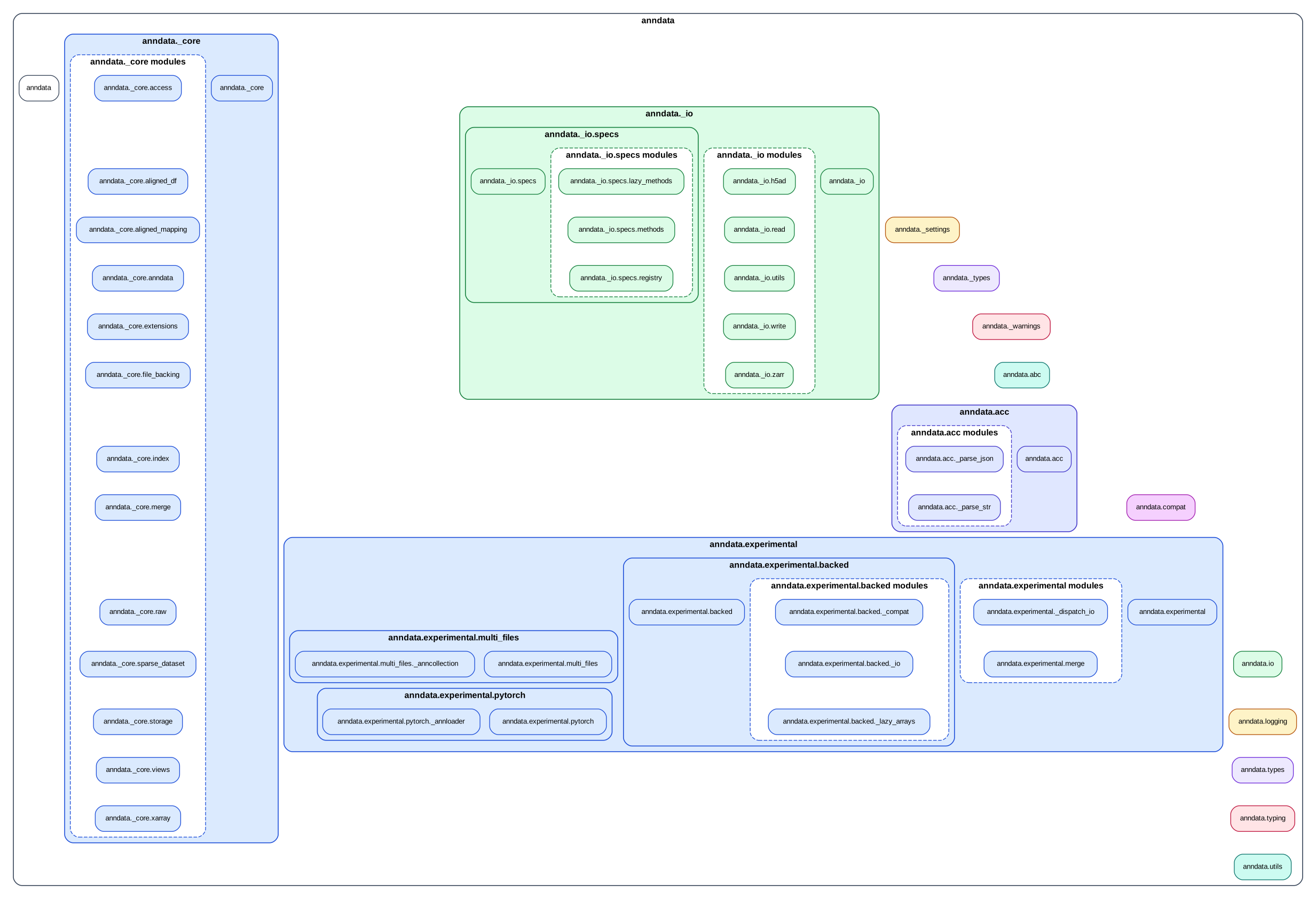
First, the module layout. This is the package modularization view:
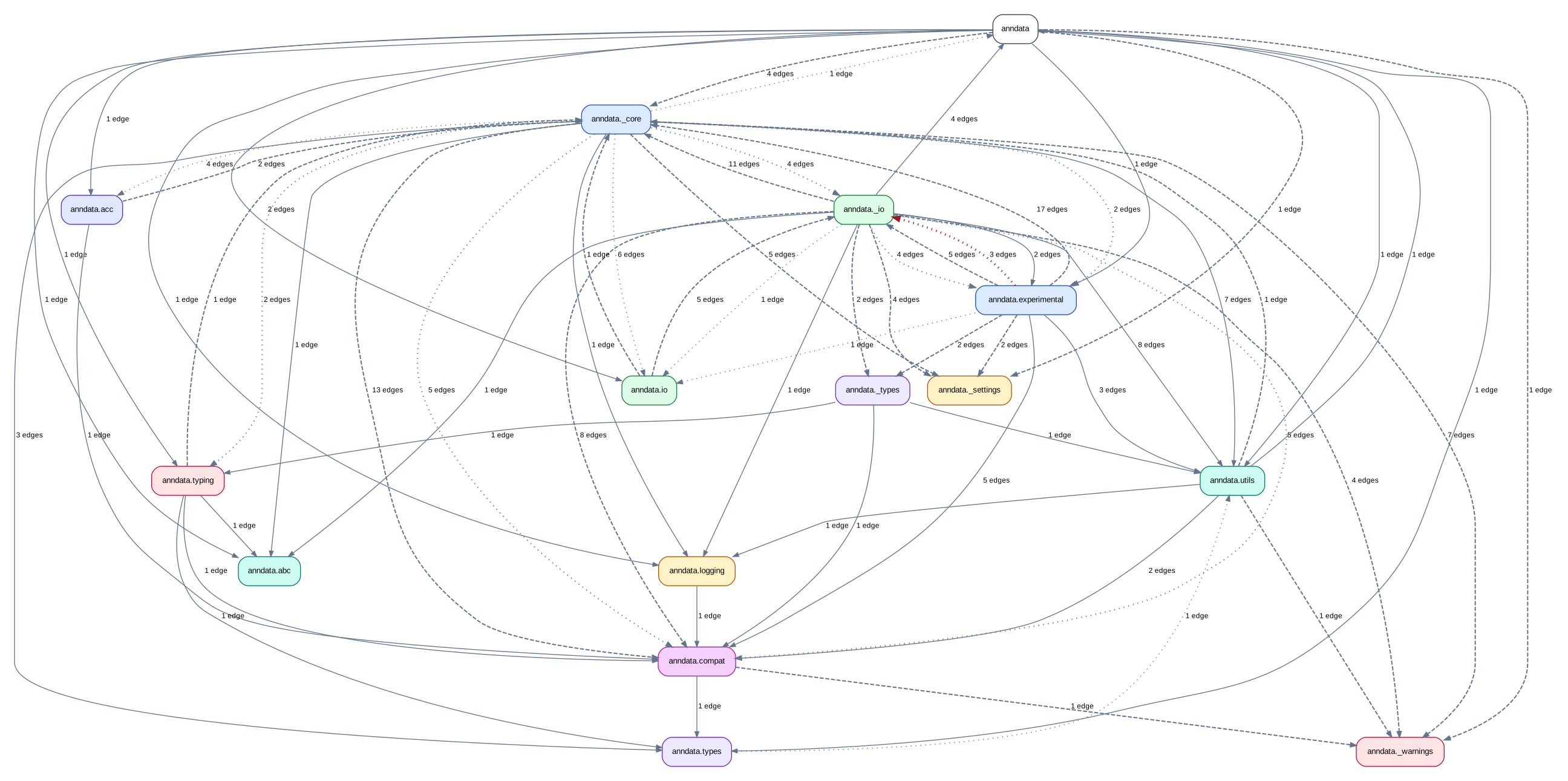
Then the package split. This is a grouped dependency graph over the analyzed
anndata package. _core is the architectural center, _io and
experimental sit around it. In this graph:
- the dark-red package edge reflects forbidden imports between the grouped areas
- lighter policy-marked edges come from boundary-helper findings surfaced by policy mode
Because this is a grouped package-level graph, multiple module-level findings can collapse into one package-level edge.